



International eCommerce shipping starts with accurate order data. Product description, item value, currency, country of origin, HS code, and shipment reason all affect customs clearance.
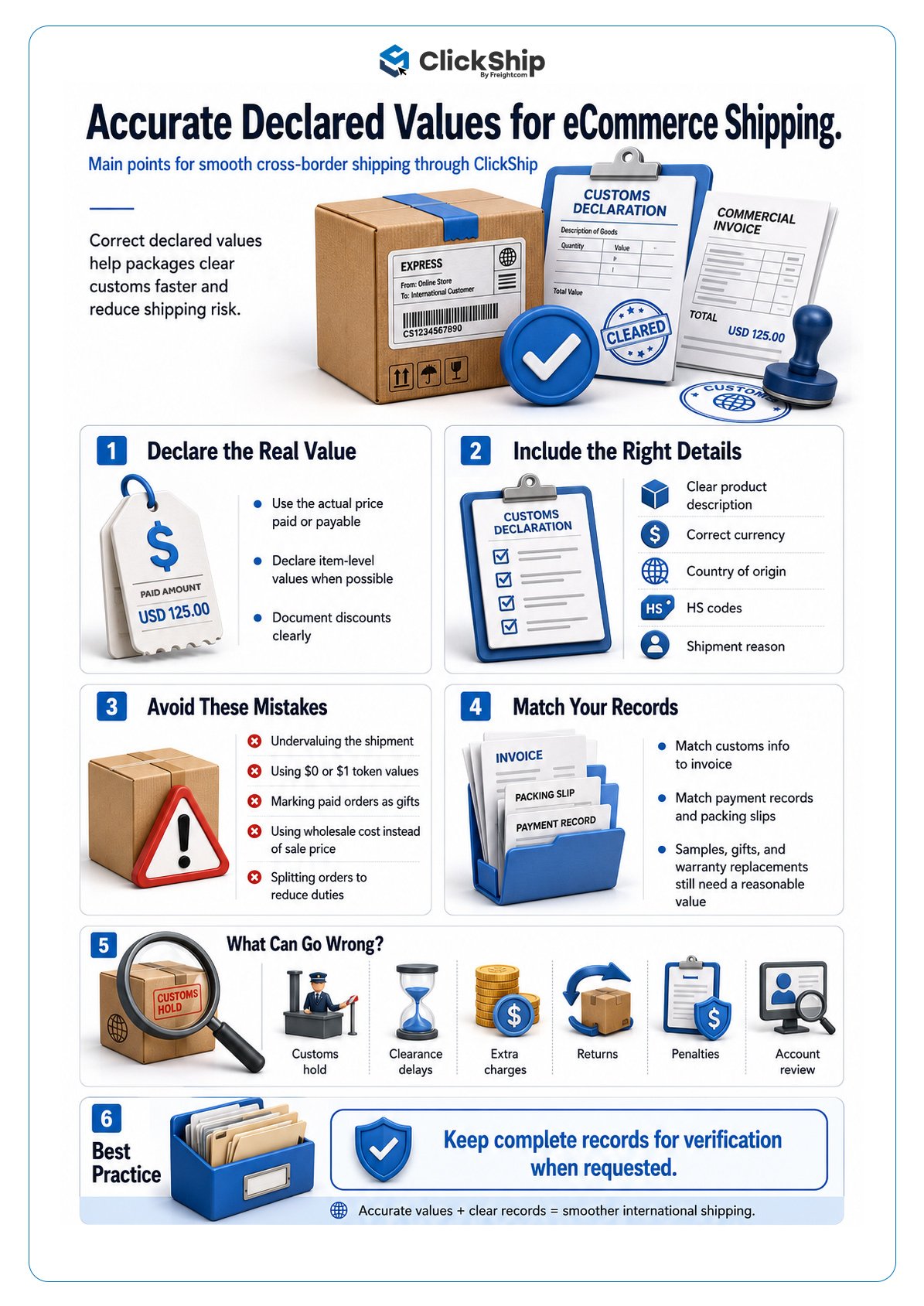
For ClickShip customers, this matters because customs authorities, carriers, and brokers rely on the shipment details you enter when creating labels. If the declared value does not match the true order value, your package could face delays, inspections, extra charges, returns, penalties, or account review.
This guide explains how eCommerce sellers should handle declared values for cross-border orders, marketplace sales, samples, gifts, warranty replacements, and promotional shipments.
Please note: the information provided in this guide is for general informational purposes only and does not constitute legal, tax, or customs advice. While we strive to ensure accuracy, we make no guarantees and assume no responsibility for any errors, omissions, or outcomes resulting from the use of this information. Customers are responsible for verifying requirements with the appropriate customs authorities or trade professionals before shipping.
What is Declared Value for Customs?
Declared value for customs is the value used by customs authorities to assess duties, taxes, and import charges.
For most eCommerce sales, the correct value starts with the transaction value, meaning the price paid or payable by the buyer for the goods. The World Customs Organization explains that transaction value is the primary basis for customs value, and the European Commission describes it as the price actually paid or payable when goods are sold for export.
Canada Border Service Agency (CBSA) also states that value for duty is the base figure used to calculate duty on imported goods, and a value for duty must be declared for goods imported into Canada.
Why This Matters for eCommerce Sellers
eCommerce shipments often involve low-value parcels, promotional discounts, bundles, free samples, returns, exchanges, and warranty replacements. These situations create valuation mistakes when sellers rely on shortcuts.
The World Customs Organization has noted that cross-border eCommerce creates customs valuation challenges for duty and tax collection at the border.
For US-bound eCommerce shipments, this has become even more important. Since August 29, 2025, duty-free treatment for low-value shipments valued at or under $800USD from all countries has been suspended. This means accurate item values, product descriptions, and supporting records matter more than ever.
What is Undervaluation?
Undervaluation happens when the customs value declared on a shipment is lower than the true value of the goods.
This includes:
- Declaring a lower value than the customer paid
- Using $0 or $1 for samples, gifts, promotional items, or warranty parts
- Reducing the value because the buyer asks for a lower invoice
- Splitting one customer order into smaller values to reduce duties or taxes
- Listing the wholesale cost instead of the actual eCommerce sale price
- Entering a customs value that does not match the order confirmation or payment record
What Value Should eCommerce Sellers Declare?
Use the value tied to the sale and keep support for it.
For a standard online order, declare the price the buyer paid or agreed to pay for each product. CBP states that the value on a commercial invoice for goods entering the United States should be the price the U.S. buyer paid for the goods.
For discounted orders, use the documented transaction value and keep the order record showing the discount, coupon, promotion, or sale price.
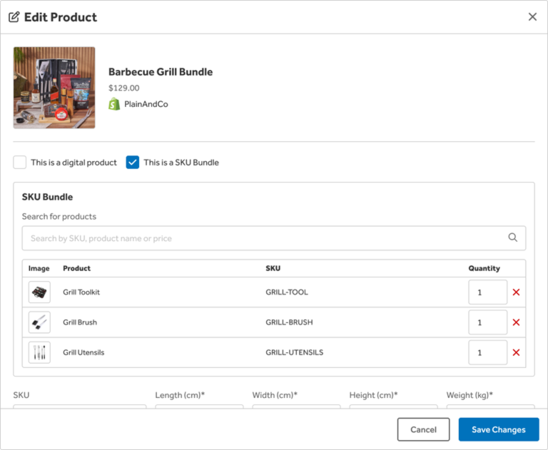
For bundles or kits, break the value down by item where possible. Customs reviewers need to understand what each product is, where it came from, and what value applies.
For samples, gifts, replacement items, or promotional products, do not use $0. Enter a reasonable customs value and clearly identify the reason for export. CBSA states that a value for duty is required even for goods received free of charge, including gifts.
Common eCommerce Mistakes to Avoid
Marking a Sale as a Gift
Do not mark a customer order as a gift when the buyer paid for it. This creates risk for the seller and receiver.
Lowering the Value at the Customer’s Request
Customers sometimes ask sellers to reduce the invoice value to avoid duties or taxes. Do not do this.
Using Product Cost Instead of Selling Price
If the customer paid $80 and your product cost was $25, the customs value should usually start from the amount paid by the customer, not your internal cost.
Declaring Free Samples as $0
Free goods still need a customs value. Use a supportable value and describe the shipment reason clearly.
Ignoring Discounts
If the customer used a valid discount code, keep the order record. Show the sale price, discount, and final paid value clearly.
Using Vague Product Descriptions
Descriptions like “merchandise,” “accessories,” “parts,” or “gift” increase clearance risk. Use clear descriptions like “cotton men’s t-shirt,” “stainless steel water bottle,” or “ceramic coffee mug.”
Mismatching the Order and Invoice
Your ClickShip customs details should match your store order, payment record, invoice, and packing slip.
Splitting Shipments to Avoid Thresholds
UPS’s customs valuation checklist states that the purchase price must match proof of payment and that falsifying price or splitting orders into lower customs values is a serious legal violation.
What Your Commercial Invoice Should Include
For eCommerce shipments, your customs invoice should include:
- Seller name and address
- Buyer or receiver name and address
- Importer details, where different
- Clear product description
- Quantity
- Unit value
- Total value
- Currency
- Country of origin
- HS code, where available
- Reason for export, such as sale, return, sample, gift, repair, or warranty replacement
- Shipping, insurance, packing, or other charges, where required
- Discounts or promotions, where relevant
- Incoterms, where applicable
- Order number or reference number
For U.S. imports, 19 CFR 141.86 lists invoice requirements including merchandise description, quantities, purchase price, currency, charges, country of origin, and other details needed for customs review.
ClickShip eCommerce Declared Value Checklist
A Simple Workflow for eCommerce Sellers
Use this process for every international order:
- Pull the paid order value from your store or marketplace.
- Confirm item-level values before creating the shipment.
- Check product descriptions, country of origin, and HS codes.
- Confirm the shipment reason.
- Create the label in ClickShip using matching customs information.
- Save proof of payment and order details.
- Review any unusual shipment before shipping, such as free replacement, sample, return, or high-value order.
- This helps reduce border delays and improves the delivery experience for your customer.
What Happens When a Shipment Looks Undervalued?
If customs, a broker, carrier, or ClickShip identifies a possible valuation issue, you might need to provide proof of payment, order records, invoices, product listings, or an explanation of how the declared value was calculated.
Possible outcomes include:
- Customs hold
- Clearance delay
- Shipment inspection
- Request for proof of payment
- Corrected duties and taxes
- Storage or brokerage charges
- Return to sender
- Penalties or fines
- Account review or suspension
The carrier guideline provided as reference states that customers are responsible for the authenticity, accuracy, completeness, and timeliness of shipment information. It also notes that carriers reserve rights such as requesting proof of payment, inspecting shipments, returning shipments, or suspending accounts when valuation concerns arise.
Resource Links for eCommerce Shippers
CBSA, Customs valuation handbook.
CBP, Commercial invoice value guidance.
eCFR, 19 CFR 141.86 invoice requirements.
European Commission, Customs valuation quick information.
UPS, customs valuation checklist.
WCO, eCommerce and Customs Valuation symposium.
Final Note for ClickShip Customers
Accurate declared values help protect your customer experience. Before you ship internationally, make sure the customs value reflects the real order value, matches your supporting records, and includes the product details customs needs to clear the package. When in doubt, review the official customs resources or speak with a qualified customs broker before shipping.